


Does Juvederm Filler Support Volume Structure?
- Bisma Jamal
- Jun 4
- 3 min read

Does Juvederm Filler Support Volume Structure? is a common question among individuals exploring non-surgical facial rejuvenation and structural enhancement options. In aesthetic medicine, volume support refers to how well a filler restores contour, lift, and facial balance while maintaining natural proportions.The approach of Juvederm Filler in Dubai has become widely discussed for its role in modern facial harmonization techniques, especially when performed under professional aesthetic care at Dynamic Clinic, where treatment planning is guided by facial anatomy and balance principles.
Understanding Volume Structure in Aesthetic Treatments
Volume structure in the face is not just about adding fullness; it is about restoring the natural scaffolding that supports youthful contours. As skin loses collagen, fat pads shift, and bone density reduces, facial hollows become more visible.
Juvederm fillers are formulated to integrate into soft tissue layers and provide support where structural depletion has occurred. This makes them relevant for areas requiring lift and contour rather than superficial smoothing alone.
Key aspects of volume structure include:
Restoration of midface projection
Support for cheek elevation and contour
Softening of deep folds caused by volume loss
Reinforcement of jawline definition
Balance between facial thirds for symmetry
How Juvederm Filler Works for Structural Support
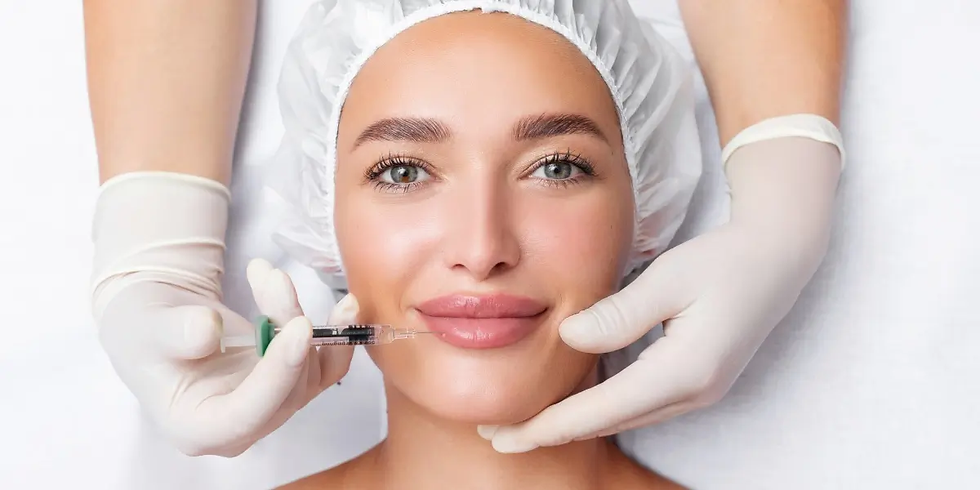
Juvederm is based on hyaluronic acid, a naturally occurring substance in the skin that attracts and retains moisture. Its gel consistency allows controlled placement within deeper dermal layers.
When injected strategically, it works in two ways:
Physical lifting effect: The gel adds internal support beneath sagging tissues
Hydration-based plumping: Hyaluronic acid binds water, improving skin elasticity and fullness
The adaptability of the gel texture allows practitioners to choose different formulations depending on whether the goal is subtle contouring or more defined structural enhancement.
Areas Where Volume Support Is Most Noticeable
Juvederm fillers are commonly used in areas where volume loss has a direct impact on facial structure. These include:
Cheeks: Restores midface lift and youthful contour
Temples: Reduces hollow appearance and improves facial continuity
Nasolabial folds: Softens deep lines caused by volume depletion
Jawline: Enhances definition and lower face structure
Under-eye region: Improves hollow appearance for a smoother transition
Each area requires precise depth placement to maintain natural movement and avoid overcorrection.
Factors That Influence Structural Results
The effectiveness of Juvederm in supporting volume structure depends on multiple clinical and individual factors. These include facial anatomy, skin quality, and injection technique.
Important considerations include:
Degree of natural volume loss
Thickness and elasticity of the skin
Type of Juvederm formulation used
Depth and placement technique
Symmetry of facial proportions
Proper assessment ensures that structural enhancement does not disrupt natural expression or facial harmony.
Safety Profile and Natural Integration
Juvederm is widely recognized for its biocompatibility and smooth integration into facial tissues. Since hyaluronic acid is naturally present in the body, it is generally well tolerated.
The gel gradually blends with surrounding tissue, allowing movement and facial expression to remain natural. This makes it suitable for individuals seeking subtle structural refinement rather than dramatic alteration.
Commonly emphasized safety principles include:
Gradual layering rather than overfilling
Anatomical precision during placement
Balanced distribution across facial zones
Avoidance of overcorrection for natural results
FAQs About Juvederm Filler and Volume Structure
1. Does Juvederm filler actually rebuild facial structure?
Juvederm does not rebuild bone or tissue but supports existing facial structure by restoring lost volume and enhancing contour definition.
2. How long does structural support from Juvederm last?
Duration varies based on metabolism, area treated, and product type, with results gradually integrating into the skin over time.
3. Can Juvederm improve sagging skin?
It can provide lift by replacing lost volume, which may reduce the appearance of mild to moderate sagging.
4. Is Juvederm suitable for full-face balancing?
Yes, it is often used in multi-area treatment plans to improve overall facial proportion and harmony.
5. Will the face look unnatural after volume enhancement?
When applied with anatomical precision, the results are typically subtle and maintain natural facial expressions.
Conclusion
Juvederm plays a significant role in modern aesthetic practice by offering structural volume support through targeted facial enhancement. Its ability to integrate into soft tissue layers allows it to restore balance, improve contour, and address age-related volume changes in a controlled and predictable way.


Comments