


How Long Does a Sugar Thread Lift Take?

A Sugar Thread Lift is a minimally invasive aesthetic procedure designed to support areas of the face where the skin may appear less firm. For readers researching Sugar Thread Lift in Dubai, understanding the treatment duration can help with planning and expectations. Dynamic Clinic in Dubai is one of the providers people may come across when researching this procedure, while the actual treatment time can vary according to the area being addressed and the number of threads used.
How Long Does the Procedure Usually Take?
A Sugar Thread Lift generally takes around 30 to 60 minutes, although the exact duration depends on individual treatment requirements. A smaller treatment area may take less time, while addressing several areas can require a longer appointment.
The procedure time can also be influenced by the treatment plan, preparation of the skin, placement of the threads, and the number of insertion points required. A qualified practitioner determines these details during an assessment rather than applying the same treatment duration to every person.
What Happens Before the Thread Lift?
The appointment does not begin with thread placement immediately. An initial assessment helps determine whether the treatment is appropriate and which areas may be addressed.
This stage may include:
Discussing the patient's aesthetic concerns
Assessing skin laxity and facial structure
Reviewing relevant medical and treatment history
Identifying the areas to be treated
Explaining the procedure and aftercare
Preparing and cleansing the treatment area
The preparation stage is important because accurate planning helps determine where the threads should be positioned.
How Long Does Thread Placement Take?
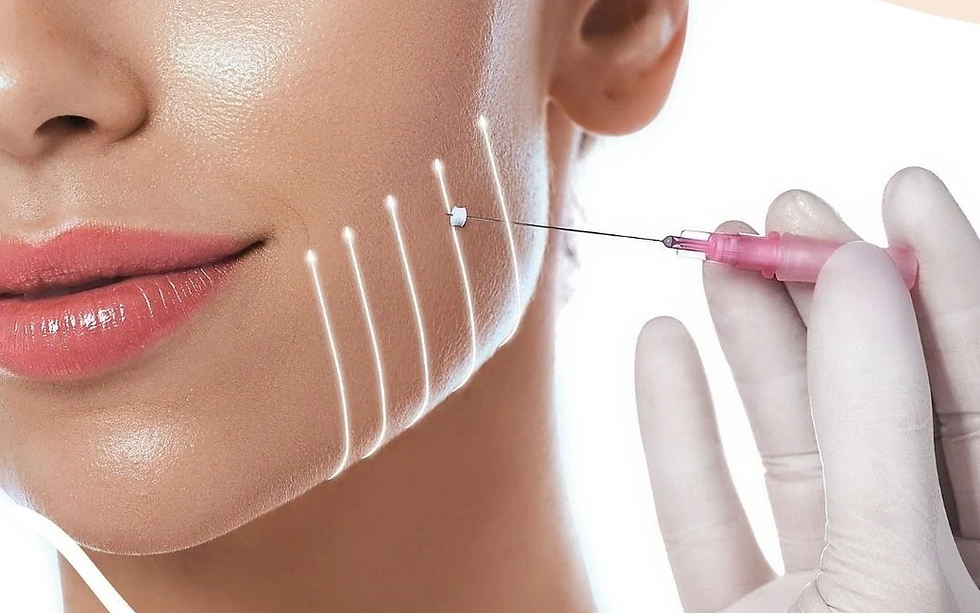
Thread placement usually forms the main part of the procedure. The treatment area is prepared, and local anaesthesia or another appropriate form of numbing may be used according to the practitioner's protocol.
The threads are then introduced beneath the skin using carefully selected entry points. Their placement depends on the intended area and treatment approach. Facial regions such as the cheeks, jawline, or lower face may require different positioning techniques.
The number of threads is another factor that can affect treatment duration. A procedure involving a limited area may be completed more quickly than one involving multiple facial regions.
Does the Treatment Take Longer for Larger Areas?
Yes, treatment duration can increase when more than one area is addressed. The practitioner may need additional time for assessment, preparation, thread insertion, and positioning.
Factors that may influence appointment length include:
Treatment area: Different facial regions require different approaches.
Number of threads: More threads can involve additional placement time.
Treatment complexity: Individual facial anatomy can affect planning.
Number of areas: Treating several areas may require a longer appointment.
Preparation requirements: Skin preparation and anaesthesia can add time.
These factors make it difficult to give one exact duration for every Sugar Thread Lift appointment.
What Can Affect Sugar Thread Lift Treatment Time?
Several practical and anatomical factors can influence how long the procedure takes. Facial anatomy, skin condition, the selected treatment area, and the desired treatment plan can all affect the appointment.
Previous aesthetic procedures may also be relevant during the assessment. Providing accurate information about previous treatments allows the practitioner to consider the overall treatment history when planning thread placement.
For this reason, online estimates should be viewed as general guidance rather than a fixed appointment length.
Is a Sugar Thread Lift a Long Procedure?
Compared with many surgical facial procedures, a Sugar Thread Lift is typically performed during a relatively short appointment. It is generally carried out as a minimally invasive treatment rather than through conventional surgical incisions.
However, the duration of the procedure should not be the only consideration. A proper consultation, appropriate patient selection, sterile technique, precise thread placement, and suitable aftercare are important parts of the treatment process.
What Happens After the Procedure?
After thread placement, the practitioner may provide instructions relating to facial movement, skin care, physical activity, and follow-up. The appropriate recommendations depend on the treatment technique and individual circumstances.
Some people may return to routine activities relatively soon, while others may need to modify certain activities temporarily. Following the practitioner's aftercare instructions is important for supporting appropriate healing and reducing unnecessary pressure on the treated area.
Frequently Asked Questions
How long does a Sugar Thread Lift take?
A Sugar Thread Lift commonly takes about 30 to 60 minutes, although treatment time varies depending on the areas treated, number of threads, and individual treatment plan.
Can a Sugar Thread Lift take more than an hour?
It can. Treating multiple areas or using a more involved treatment plan may increase the appointment duration.
Does consultation time count as part of the treatment?
The consultation and preparation may occur before thread placement and can add to the total appointment time. The exact schedule depends on the provider's process.
Does the number of threads affect treatment time?
Yes. A greater number of threads may require additional planning and placement time, although the relationship is not necessarily proportional.
Can treatment time vary between patients?
Yes. Differences in facial anatomy, treatment areas, previous procedures, and individual treatment plans can all influence the duration.
Conclusion
A Sugar Thread Lift is usually completed within a relatively short treatment appointment, often taking around 30 to 60 minutes for the procedure itself. The total time can vary according to the treatment area, number of threads, preparation, and individual requirements. A professional assessment provides the most reliable estimate because thread placement should be planned around the person's facial anatomy and treatment goals.


Comments